In 2026 the sudden deaths of Rainelle Krause and Limmie Pulliam shocked and saddened the opera world. Both Krause and Pulliam enjoyed very successful recent engagements in important venues. Their loss brings to mind other artists whose careers were truncated by tragic accidents or fatal natural causes. This post will serve as a memorial to Krause, Pullman, Marie Collier, and Salvatore Licitra.
Rainelle Krause sang the Queen of the Night in Mozart’s Die Zauberflöte nearly one hundred and fifty times in major opera houses, including the Metropolitan. This clip of Krause in a 2023 performance at the Dutch National Opera documents her extraordinary command of the aria’s extreme range, florid complexity, and most unusually, the fury of the Queen’s wrath---and all the while roaming the stage in a wheelchair.
Rainelle Krause died of complications following surgery on March16, at the age of thirty-eight.
Dramatic tenor Limmie Pulliam died in his sleep on May 19-20, just after singing in Mahler’s Eighth Symphony with the Dallas Symphony. Two brief clips fully convey not only the power of his voice but his deep feeling for the text, the homogeneity of his beautiful timbre, and his solid technique. First are the daunting phrases of “Esultate,” Otello’s triumphant entrance in Verdi’s opera.
In the Act III aria, “Ch’ella mi creda (Let her believe,” from La Fanciulla del West,” Dick Johnson, about to be lynched, sings of his love for Minnie. In this clip from a rehearsal (unfortunately, the tenor is barely visible in the left corner of the image), Pulliam movingly proves his affinity for the heartbreaking lyric register of one of Puccini’s most haunting melodies.
Australian soprano Marie Collier died in 1971 at the age of forty-four. It was never ascertained whether her fall from a window was an accident or suicide. Collier’s lively international career began when she stepped in for Maria Callas in a sold-out 1965 London Tosca.
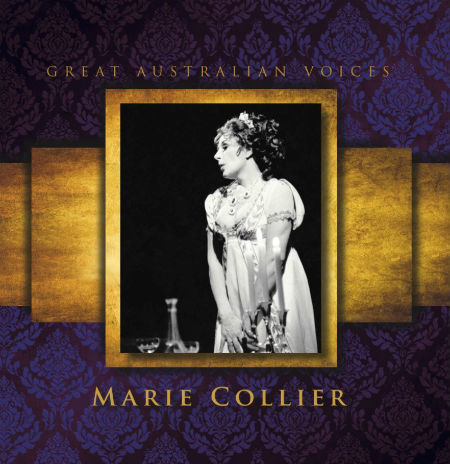
New York heard her in the world premiere of Martin David Levy’s Mourning Becomes Electra (1967) during the opening season of the Met’s Lincoln Center opera house. For many, she dominated the stellar cast headed by Evelyn Lear, Sherrill Milnes, and John Reardon. Although Collier’s riveting presence and distinctively intense sound thrived in her many modernist roles, her strong affect, musicality, and spot-on intonation invest Aïda’s daunting Act III aria, “O patria mia” with special pathos. The clip is from a 1966 Buenos Aires performance.
Tenor Salvatore Licitra also won fame by substituting for an operatic superstar. When Luciano Pavarotti called in sick for the Met’s gala Tosca on May 11, 2002, Licitra took the stage in his company debut and won an ovation. Facing execution, Mario’s poignant farewell to his beloved Tosca, “E lucevan le stelle (The stars were shining”) documents the enlivening effect of Licitra’s sensitive phrasing on the familiar aria. The clip is from a 2000 La Scala production, conducted by Riccardo Muti. The tenor went on to sing nine roles in seven Met seasons. His last was, again, Mario Cavaradossi, in April 2011. At the age of forty-three, he died as a result of a motocycle crash in August 2011.
|
|
|
No comments:
Post a Comment
Please enter your comment here: