Showing posts with label Puccini. Show all posts

Monday, June 1, 2026

Interrupted Melodies: Krause, Pulliam, Collier, Licitra

In 2026 the sudden deaths of Rainelle Krause and Limmie Pulliam shocked and saddened the opera world. Both Krause and Pulliam enjoyed very successful recent engagements in important venues. Their loss brings to mind other artists whose careers were truncated by tragic accidents or fatal natural causes. This post will serve as a memorial to Krause, Pullman, Marie Collier, and Salvatore Licitra.

Rainelle Krause sang the Queen of the Night in Mozart’s Die Zauberflöte nearly one hundred and fifty times in major opera houses, including the Metropolitan. This clip of Krause in a 2023 performance at the Dutch National Opera documents her extraordinary command of the aria’s extreme range, florid complexity, and most unusually, the fury of the Queen’s wrath---and all the while roaming the stage in a wheelchair.


Rainelle Krause died of complications following surgery on March16, at the age of thirty-eight.

Dramatic tenor Limmie Pulliam died in his sleep on May 19-20, just after singing in Mahler’s Eighth Symphony with the Dallas Symphony. Two brief clips fully convey not only the power of his voice but his deep feeling for the text, the homogeneity of his beautiful timbre, and his solid technique. First are the daunting phrases of “Esultate,” Otello’s triumphant entrance in Verdi’s opera.


In the Act III aria, “Ch’ella mi creda (Let her believe,” from La Fanciulla del West,” Dick Johnson, about to be lynched, sings of his love for Minnie. In this clip from a rehearsal (unfortunately, the tenor is barely visible in the left corner of the image), Pulliam movingly proves his affinity for the heartbreaking lyric register of one of Puccini’s most haunting melodies.


Australian soprano Marie Collier died in 1971 at the age of forty-four. It was never ascertained whether her fall from a window was an accident or suicide. Collier’s lively international career began when she stepped in for Maria Callas in a sold-out 1965 London Tosca. 
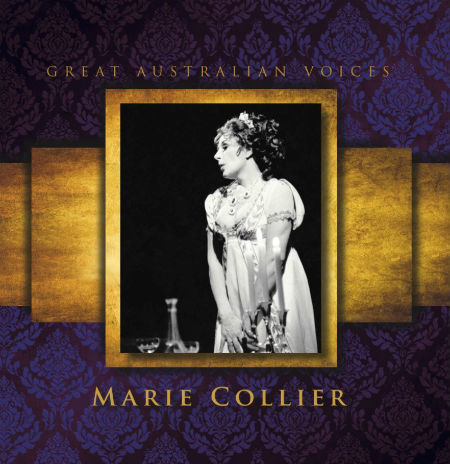
 

 New York heard her in the world premiere of Martin David Levy’s Mourning Becomes Electra (1967) during the opening season of the Met’s Lincoln Center opera house. For many, she dominated the stellar cast headed by Evelyn Lear, Sherrill Milnes, and John Reardon. Although Collier’s riveting presence and distinctively intense sound thrived in her many modernist roles, her strong affect, musicality, and spot-on intonation invest Aïda’s daunting Act III aria, “O patria mia” with special pathos. The clip is from a 1966 Buenos Aires performance.


Tenor Salvatore Licitra also won fame by substituting for an operatic superstar. When Luciano Pavarotti called in sick for the Met’s gala Tosca on May 11, 2002, Licitra took the stage in his company debut and won an ovation. Facing execution, Mario’s poignant farewell to his beloved Tosca, “E lucevan le stelle (The stars were shining”) documents the enlivening effect of Licitra’s sensitive phrasing on the familiar aria. The clip is from a 2000 La Scala production, conducted by Riccardo Muti. The tenor went on to sing nine roles in seven Met seasons. His last was, again, Mario Cavaradossi, in April 2011. At the age of forty-three, he died as a result of a motocycle crash in August 2011.


Monday, March 17, 2025

The Beautiful Voice, 1: Margaret, the Other Price

Operaphiles generally agree about singers whose prime attribute is a beautiful voice. Before recognizing musicality, charisma, interpretation, diction, personality, they comment on timbre: the dominant adjectives are “creamy”, “sweet,” “dulcet.” This blog has devoted posts to singers initially beloved for their “beautiful voice, among them Kathleen Ferrier, Renata Tebaldi, Dorothy  Maynor, and Rosa Ponselle. This is the first in a series of posts focused specifically on artists endowed with a “beautiful” voice.

Two sopranos shared a family name, a repertoire, an era, and esteem for the luscious quality of their timbre. Margaret Price (1941-2011
) was more than a decade younger than Leontyne Price (1927- ). Although her career was centered  in Europe, with particular allegiance to the opera companies of Cologne and Munich, Margaret sang frequently in Chicago and San Francisco. She rarely performed with the Met--less than twenty times between 1985 and 1995; Leontyne was a major Met star; her tally was over two hundred performances between 1961 and 1985. They are both remembered for the Donna Annas of Don Giovanni, Fiordiligis of Così fan tutte, and Amelias of Verdi’s Un Ballo in Maschera. They sang Aïda, Margaret much less successfully than Leontyne, for  whom it was a signature role (Leontyne once replaced an indisposed Margeret in a San Francisco Aïda). Margaret excelled as Mozart’s Konstanze (Die Entführung aus dem Serail), a bravura assignment Leontyne never attempted. As far as I know, Margaret never took on La Forza del destino, one of Leontyne’s specialties. Her favorite Verdi assignment was Elisabetta in Don Carlo, never to be Leontyne’s lot.


Margaret Price’s discography is extensive and covers the breadth of her repertoire. The YouTube clips referenced in this post give some idea of the clarity and extraordinary texture of her voice but, alas, cannot reproduce the magic of her sound as it was heard live.


Margaret often said that she became a singer because she loved lieder. The first clip is Mahler’s song “Ich bin der Welt abhanden gekommen (I Am so Lost to the World),” based on a poem by Friedrich Rückert. Here is a translation of the last lines: “I am now dead to the world's commotion/ And, resting in this silent retreat,/ I live alone in my own heaven,/ In my own loving, in my own song.” The soprano captures the touching introspection of the piece and engages in a haunting duet with the often repeated English horn solo.


Mozart was a key figure in Margaret Price’s early success and enduring career. She
made her debut in the mezzo-soprano role of Cherubino before moving upward to the
challenging soprano leads of Don Giovanni and Così fan tutte. Many theatres heard her Contessa in Le Nozze di Figaro. Here is the great Act III aria “Dove sono I bei momenti (Where have all those happy moments gone)” from a 1984 live concert in San Francisco. Price conveys the agitation of the recitative, then the Contessa’s sad reflection on her happy past, when she was certain of the love of her philandering husband and, finally, in the spirited cabaletta, on her hope to regain it. Of note, in addition to the stunning quality of Price’s timbre, is the rhythmic precision of her phrasing and embellishments and the perfection of her attacks, all serving the
vivid expression of mood and character.


Margret Price sang Verdi frequently, unleashing the opulence of her voice in the expansive melodramatics of his scores. Her favorite Verdi role, Elisabetta, calls upon the wealth of the soprano’s resources as she addresses the tomb of Charlemagne (“Tu, che le vanità conoscesti del mondo [You have known the vanities of this world]”), lamenting her lost love, Don Carlo, her loveless marriage to his father, King Philip, and her hope to protect Carlo from Philip’s wrath. Price, the impeccable singer of lieder and the classical Mozart stylist, is also an authentically demonstrative Verdian spinto. The clip is from a 1986 concert conducted by Christoph Eschenbach.


The most surprising excerpt in this post comes from a complete recording of Tristan and Isolde. Isolde is a role that calls for the sturdiest lungs, the greatest volume, the strength of a Kirsten Flagstad, Helen Traubel, Birgit Nilsson, to name only its most illustrious exponents at the Metropolitan Opera. Margaret Price, who never considered herself a Wagnerian or a dramatic soprano, of course never agreed to sing Isolde live, on stage; she did answer the call of conductor Carlos Kleiber to commit the role to a recording. Here, her “beautiful,” young, lyric voice gives subtle and revelatory expression to Wagner’s Irish princess. For many, it is the definitive recorded Isolde. The “Liebestod,” is a fitting climax to Price’s unerring traversal of Isolde’s journey.


PS: Margaret Price even excels in Puccini, as you will hear in this excerpt from a complete recording of Turandot, conducted by Roberto Abbado (nephew of Claudio Abbado). She sings, of course, Liù, not the title role. Here is her touching rendition of the Act III aria, “Tu, che di gel sei cinta, (You, who are girdled in ice).”


Monday, September 4, 2023

In Memoriam: Renata Scotto (1934-2013)

 The vast repertoire of Renata Scotto encompassed 19th century vocal music, from the Classical Cherubini to the Grand Opera of Meyerbeer, through the great bel canto composers, Rossini, Bellini, and Donizetti. Although she often played Verdi’s Violetta, Gilda, Lady Macbeth, Luisa Miller, and Desdemona, Scotto was perhaps most renowned for her Puccini roles. On the concert or the operatic stage, and most often on both, she left her mark on nearly all his works, from Le Villi (Anna) to Turandot (Liù). From the mid-1960s through the early 1980s Scotto was one of most widely recorded operatic sopranos; approximately forty of her complete performances are available on commercial and pirated CDs and DVDs.

Following her 1952 debut in La Traviata, Scotto was engaged by the major Italian opera companies. Her breakthrough to international stardom occurred during the visit of La Scala to the 1957 Edinburgh Festival when she replaced Maria Callas in Bellini’s La Sonnambula. She first appeared in the U.S. as Mimi in Chicago in 1960 and five years later triumphed as Cio-Cio-San at the Met, the role with which more than two decades later she bade farewell to the company.  She had racked up more than 300 Met performances in New York and on tour. Fortunately for us, she can continue to be seen and heard streaming in the 1977 inaugural telecast of PBS Live from the Met, La Bohème, and eight other titles in the series. And after retiring from major lyric theatres in the 1990s, well into her sixties, she took on a new language, German, and new arduous roles, the Marschallin (Der Rosenkavalier), Kundry (Parsifal), and Klytemnestra (Elektra).

Scotto was often the object of harsh criticism. Some found her detailed phrasing overly fussy, her acting mannered, and “over the top.” Many criticized her for attempting parts that normally fell to rich-voiced dramatic sopranos—Bellini’s Norma, Ponchielli’s Gioconda, for instance. There is no denying that she was often unable to produce the requisite volume with beautiful, rounded tone. But for many there were sufficient compensations in her refined bel canto technique and her deep insight into the music and the text.

I have chosen three clips that illustrate Scotto’s command of the light-voiced lyric coloratura manner, the more assertive phrasing demanded by Verdi, and the searing intensity needed for Puccini.

At the close of Donizetti’s L’Elisir d’amore, in the heartfelt “Prendi, per me sei libero (Take this, I have bought back your freedom)” Adina at last confesses her love for Nemorino as she offers him proof that she has saved him from his reckless enlistment in the army. This clip is from a televised 1967 Florence performance conducted by Gianandrea Gavazzeni. Scotto’s mastery of messa di voce, the gradual crescendo and subsequent decrescendo of a single note, shapes the aria with the emotions the character is finally able to express. The Nemorino you see seated next to Adina is Carlo Bergonzi.


Scotto’s Gilda is captured on two commercial recordings. This clip is drawn from the version conducted by Carlo Maria Giulini. Here, in “Tutte le feste al tempio (Each holy day in church),” Gilda confesses to Rigoletto, her distraught father, that she fell in love with a handsome stranger, the Duke of Mantua disguised as a poor student, and was later kidnapped by the Duke’s courtiers.


As Scotto enacts Cio-Cio-San’s resolve to commit suicide and bids an agonized farewell to her little son, she summons the tragic stature of the abandoned wife determined to die with honor. This clip is drawn from a remarkable 1967 recording conducted by Sir John Barbirolli. At the very end you will hear the voice of Pinkerton {Carlo Bergonzi) calling out, all too late, the name of the Japanese wife he has betrayed.


YouTube offers a profusion of Scotto’s performances. Particularly recommended are her Violetta (La Traviata), Elena (I Vespri Siciliani), Cio-Cio-San (Madama Butterfly), and the DVD of her 1977 Mimì from the Live from the Met telecast.


Saturday, July 22, 2023

Mascagni’s L’Amico Fritz and Lodoletta: “commedia lirica” and “dramma lirico”

With Cavalleria rusticana (1890), his first opera and the liminal title of Italian verismo, Pietro Mascagni (1863-1945) was assured a place of privilege in operatic history. In a single act, the composer distilled the unbridled passion—and jealousy—of a woman betrayed. Revenge followed, and with it the offstage duel fatal to her guilty lover. So goes life in a Sicilian village in the late 19th century as depicted in the libretto based on the Giovanni Verga novella (1883). That more than one reviewer credited the success of the piece to its high drama rankled the composer.

In response, Mascagni next chose “a simple libretto, something almost insubstantial, so that the opera will be judged entirely on its music.” Like Cavalleria, L’Amico Fritz (1891) has a rural setting, sylvan Alsace. But here, the similarity ends. In Fritz, a “commedia lirica,” the eponymous hero is a confirmed Jewish bachelor and wealthy landowner. David, the local rabbi, takes it upon himself to awaken his “friend’s” love for Suzel, the daughter of one of his tenants. The happy ending promises the couple an imminent wedding.

L'Amico Fritz enjoyed enormous acclaim at its Rome premiere, was soon conducted by none other than Gustav Mahler in Hamburg and was taken up quickly by other European companies. Yet the work failed at the Met in 1894. Since then, L’Amico Fritz has been heard a mere handful of times in New York, has survived on the margins of the core repertoire in Italy, and is only occasionally presented elsewhere. Perhaps, bent on an “insubstantial” plot so as to privilege his music, and as a rebuke to the critics of his first opera, Mascagni compromised the afterlife of his second.

If productions are rare, recordings of L’Amico Fritz are plentiful: we have at least ten editions on CD or DVD, some taken from live performances, two produced in the studio. The most popular excerpt, the Act II “Cherry Duet,” is on YouTube in a plethora of versions. Here, drawn from a 1969 complete studio recording, are Luciano Pavarotti and Mirella Freni at their peak. Fritz and Suzel, still hesitant to express their feelings for each other, sing instead the praises of music and Springtime.


Earlier, Suzel offers a bouquet of violets to Fritz along with her Act I “Son pochi fiori (Just a few flowers).” In a clip from a 1980 studio recording Leona Mitchell lends her rich, well-equalized timbre to both the aria’s dramatic opening and its expansive conclusion.


Between 1890 and 1935 Mascagni published fifteen operatic scores, many bearing labels that signal their diverse genres—lyric comedy, tragedy, drama, melodrama, idyll, among others. His 1917 “drama lirico,” Lodoletta, is based on Ouida’s 1874 novel, Two Little Wooden Shoes. The title character, a Dutch orphan, and Flammen, a French painter exiled in Holland, are chaste lovers. When Flammen is pardoned, Lodoletta follows him to Paris in Act III and, mistakenly thinking him unfaithful, dies in the snow on his doorstep.

Lodoletta, moderately successful at its Rome premiere, was greeted with even less enthusiasm elsewhere. The Met’s most bankable cast notwithstanding--Geraldine Farrar, Enrico Caruso, Pasquale Amato--the opera managed to string together very few repetitions in two seasons. A single aria, Lodoletta’s “Flammen, perdonami (Flammen, forgive me),” is familiar to contemporary operaphiles in the excellent renditions of Freni, Renata Tebaldi, Renata Scotto, and Renée Fleming.

And then there is Mafalda Favero. Favero and Jussi Björling made their Met debuts in a 1938 La Bohème. The tenor went on to a long career with the company; the soprano, detained in Italy by World War II, never again returned to the United States, alas. Favero’s 1941 recording of “Flammen, perdonami” is unforgettable. The exceptional clarity of her diction captures the crushing pathos of the dying Lodoletta.


Accessible on YouTube is a complete recording of L’Amico Fritz conducted by the composer and starring Ferruccio Tagliavini and Pia Tassinari. Roberto Alagna and Angela Gheorghiu are Fritz and Suzel in a more recent album. Strongly recommended is the “Cherry Duet” sung by Favero and Tito Schipa and also by Tagliavini and Magda Olivero.


Tuesday, January 17, 2023

Recovering the Forgotten Singer, 4: Joseph Schmidt


Renowned operatic tenor Joseph Schmidt (1904-1942) was never engaged by an opera company. Managers considered him too short (just under five feet [1.54 meters]) for the lyric stage. The sound stage was another matter. The angle of the movie camera compensated for his stature in nine films, most in German, a few in English-language remakes. Cinemas, concert halls, and the recording studio were his domains.

Born in a region of Romania that is now Ukraine, it was in the synagogue where, like his American contemporary Jan Peerce and the younger Richard Tucker, that Schmidt first attracted attention. He sought training in Berlin and was soon cast in leading roles in radio transmissions of complete operas, among them Meyerbeer’s L’Africaine, Mozart’s Idomeneo, and Puccini’s La Bohème. His movie career began in 1931; he achieved star status in 1933 with Ein Lied geht um die Welt (A Song Goes Round the World). A U.S. tour in 1937 grew his international reputation.

With Hitler’s rise to power in 1933, Joseph Schmidt, along with other Jewish artists, was banned from work in Germany. At the start of the war, the tenor had secured passage to Cuba when another refugee stole his reservation. Belgium became his home until the Nazi invasion of 1940. Frail, in fact gravely ill, Schmidt fled to Switzerland where he was promptly interned in a labor camp. The Swiss doctors diagnosed his condition as nothing more than “malingering” and shortly thereafter he was dead of a heart attack.

His brief career notwithstanding, Schmidt’s recorded legacy is extensive. In a clip from the 1934 film Wenn du jung bist, gehört dir die Welt (When You’re Young, the World Belongs to You) he sings the familiar aria “Ach, so fromm (known better in Italian translation as “M’apparì [She appeared to me])” from Flotow’s Martha. A few bars from the even more familiar “The Last Rose of Summer” precede the aria. Schmidt’s sunny timbre invests the music with the sweetness that was his calling-card. (Movie fans will note that the clip has been colorized and will recognize character actor S. Z. “Cuddles” Sakall from his appearance in Casablanca.)  


Tamino’s “Dies bildnis ist bezaubernd schön” from Die Zauberflöte documents Schmidt’s pure Mozartean style.


Unlike many of the French and German tenors of the 1930s, Schmidt sang Verdi and Puccini in the original Italian. His “Nessun dorma” from Turandot is, unusually, at once passionate and refined.


Adolphe Adam, best known for his score for the ballet Giselle, also composed an opera, Le Postillon de Lonjumeau (1837), that enjoyed great popularity in the 19th century. The rollicking aria, “Mes amis, écoutez l’histoire (Friends, hear the story),” sung here in German, is favored to this day by tenors with a free top register. Schmidt tosses off a high D, a daunting feat.


YouTube offers a trove of Schmidt’s recordings, including duets with Grace Moore from his 1937 American concert tour.