Showing posts with label Otello. Show all posts

Monday, June 1, 2026

Interrupted Melodies: Krause, Pulliam, Collier, Licitra

In 2026 the sudden deaths of Rainelle Krause and Limmie Pulliam shocked and saddened the opera world. Both Krause and Pulliam enjoyed very successful recent engagements in important venues. Their loss brings to mind other artists whose careers were truncated by tragic accidents or fatal natural causes. This post will serve as a memorial to Krause, Pullman, Marie Collier, and Salvatore Licitra.

Rainelle Krause sang the Queen of the Night in Mozart’s Die Zauberflöte nearly one hundred and fifty times in major opera houses, including the Metropolitan. This clip of Krause in a 2023 performance at the Dutch National Opera documents her extraordinary command of the aria’s extreme range, florid complexity, and most unusually, the fury of the Queen’s wrath---and all the while roaming the stage in a wheelchair.


Rainelle Krause died of complications following surgery on March16, at the age of thirty-eight.

Dramatic tenor Limmie Pulliam died in his sleep on May 19-20, just after singing in Mahler’s Eighth Symphony with the Dallas Symphony. Two brief clips fully convey not only the power of his voice but his deep feeling for the text, the homogeneity of his beautiful timbre, and his solid technique. First are the daunting phrases of “Esultate,” Otello’s triumphant entrance in Verdi’s opera.


In the Act III aria, “Ch’ella mi creda (Let her believe,” from La Fanciulla del West,” Dick Johnson, about to be lynched, sings of his love for Minnie. In this clip from a rehearsal (unfortunately, the tenor is barely visible in the left corner of the image), Pulliam movingly proves his affinity for the heartbreaking lyric register of one of Puccini’s most haunting melodies.


Australian soprano Marie Collier died in 1971 at the age of forty-four. It was never ascertained whether her fall from a window was an accident or suicide. Collier’s lively international career began when she stepped in for Maria Callas in a sold-out 1965 London Tosca. 
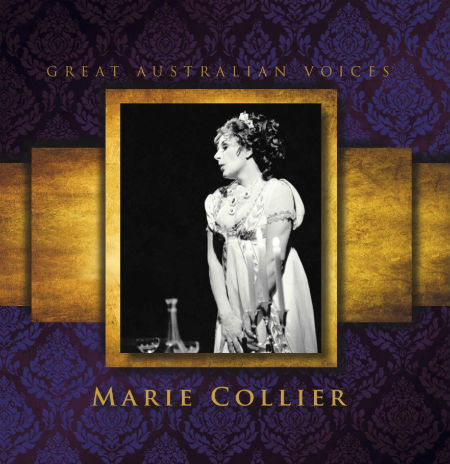
 

 New York heard her in the world premiere of Martin David Levy’s Mourning Becomes Electra (1967) during the opening season of the Met’s Lincoln Center opera house. For many, she dominated the stellar cast headed by Evelyn Lear, Sherrill Milnes, and John Reardon. Although Collier’s riveting presence and distinctively intense sound thrived in her many modernist roles, her strong affect, musicality, and spot-on intonation invest Aïda’s daunting Act III aria, “O patria mia” with special pathos. The clip is from a 1966 Buenos Aires performance.


Tenor Salvatore Licitra also won fame by substituting for an operatic superstar. When Luciano Pavarotti called in sick for the Met’s gala Tosca on May 11, 2002, Licitra took the stage in his company debut and won an ovation. Facing execution, Mario’s poignant farewell to his beloved Tosca, “E lucevan le stelle (The stars were shining”) documents the enlivening effect of Licitra’s sensitive phrasing on the familiar aria. The clip is from a 2000 La Scala production, conducted by Riccardo Muti. The tenor went on to sing nine roles in seven Met seasons. His last was, again, Mario Cavaradossi, in April 2011. At the age of forty-three, he died as a result of a motocycle crash in August 2011.


Friday, November 3, 2017

Lawrence Tibbett: Becoming an (American) Divo


Note to those who receive new posts via e-mail: You must click on the title of the new post, highlighted above in blue, in order to access moving images and sound.
Unlike Rosa Ponselle’s beginnings in opera (see Rosa Ponselle: Becoming an (American) Diva, 10/5/17), baritone Lawrence Tibbett’s operatic career began inauspiciously. His knees shaking during the whole of his 1923 Met audition, as he recounted it, he cracked on the high note. He was dismissed by the general manager with a curt “thank you.” Three weeks went by before Giulio Gatti-Casazza agreed to a second hearing. A far less agitated Tibbett sang the “Credo” from Otello. This time, Gatti was impressed enough to hire the twenty-seven-year-old Californian who had never sung in opera, not in New York, not anywhere. Tibbett was expected to master twenty-seven roles in his debut season, mostly comprimario and secondary parts, two leads, and one role for bass. In the next year or so, he was little noticed by public or press.
Tibbett got his big break in his second season. Gatti cast him as Ford, the second baritone role in Verdi’s Falstaff. But rehearsals went poorly for the inexperienced singer, who was challenged by a weak musical memory and a difficult score. The formidable, almost all-Italian cast included Antonio Scotti as Falstaff. In fact, the revival had been staged expressly for Scotti’s twenty-fifth anniversary with the company. During rehearsal, annoyed that Tibbett’s on-the-job training was slowing things down, the Italian baritone and his veteran Italian colleagues engaged in mocking exchanges over the novice’s histrionic and vocal difficulties. Although he had never set foot in Italy and did not know Italian, Tibbett got the drift. He was furious. Then came the night of the first performance, January 2, 1925. Tibbett sang the bitter aria that concludes the first scene of the second act with an extra dose of passion. During the ovation that followed, the principals took their bows. Then Scotti came out alone. But the audience kept up the clapping, stamping, whistling, and, finally, to make its will perfectly clear, began shouting, “Tibbett, Tibbett.” Meanwhile, assuming the tribute was for Scotti, Tibbett had repaired to his dressing room two floors above. The conductor did his best to carry on with the performance, but the audience, presuming that Tibbett had somehow been denied a solo bow, would not let up. Gatti acceded to the public reluctantly; attention had shifted from the honoree of the evening to the humble newcomer: “An American audience had decided that one of its own nationality should be properly recognized for his talent” (Times). The sixteen-and-a-half-minute demonstration subsided at last and the curtain rose on the next scene. From then on, Tibbett was given increasingly important assignments and with his assumption of the title role in the Met’s first Simon Boccanegra in 1932, he was uncontested as the company’s leading baritone in the Italian and French repertoires. He sang the last of his 603 Met performances on March 24, 1950. Tibbett was the first and remains, arguably the greatest, of a line of extrordinary American baritones: John Charles Thomas, Leonard Warren, Cornell MacNeil, Sherrill Milnes, and most recently Thomas Hampson.  
Tibbett’s successful audition aria, the “Credo” from Otello, forecast the return of Verdi’s opera to the Met repertoire in 1937 after a long and puzzling hiatus of twenty-five seasons. The revival came at the peak of Tibbett’s career, his voice refulgent, his charisma compelling, his dramatic and musical acumen at their sharpest. Here is Tibbett in a 1939 recording. He captures Iago’s complex praise of evil in the elasticity of his phrasing and dynamic range.
In the course of his Met career, Tibbett sang more than thirty leading roles, eight of which were in operas by Verdi. Missing was that of  Renato in Un Ballo in maschera, a title that reentered the repertoire only in 1940, by which time the baritone had undergone a serious vocal crisis and had reduced his appearances on 39th Street. Here is his rendition of Renato’s third act aria, “Eri tu.” The character expresses both his anger towards the man he believes to be his wife’s lover and his tenderness towards the woman he has lost. Tibbett employs his high pianissimo to especially touching effect.
The test role for all Verdi baritones is, of course, Rigoletto. Tibbett performed it thirty-two times with the company. In this excerpt, “Cortigiani, vil razza dannata,” he thunders the jester’s rage at the courtiers who have abducted his daughter; then, in heartrending supplication, he throws himself on their mercy.
Our next post will feature Tibbett in a wing of the repertoire that he made distinctly his own—American opera.