Showing posts with label Riccardo Muti. Show all posts

Monday, June 1, 2026

Interrupted Melodies: Krause, Pulliam, Collier, Licitra

In 2026 the sudden deaths of Rainelle Krause and Limmie Pulliam shocked and saddened the opera world. Both Krause and Pulliam enjoyed very successful recent engagements in important venues. Their loss brings to mind other artists whose careers were truncated by tragic accidents or fatal natural causes. This post will serve as a memorial to Krause, Pullman, Marie Collier, and Salvatore Licitra.

Rainelle Krause sang the Queen of the Night in Mozart’s Die Zauberflöte nearly one hundred and fifty times in major opera houses, including the Metropolitan. This clip of Krause in a 2023 performance at the Dutch National Opera documents her extraordinary command of the aria’s extreme range, florid complexity, and most unusually, the fury of the Queen’s wrath---and all the while roaming the stage in a wheelchair.


Rainelle Krause died of complications following surgery on March16, at the age of thirty-eight.

Dramatic tenor Limmie Pulliam died in his sleep on May 19-20, just after singing in Mahler’s Eighth Symphony with the Dallas Symphony. Two brief clips fully convey not only the power of his voice but his deep feeling for the text, the homogeneity of his beautiful timbre, and his solid technique. First are the daunting phrases of “Esultate,” Otello’s triumphant entrance in Verdi’s opera.


In the Act III aria, “Ch’ella mi creda (Let her believe,” from La Fanciulla del West,” Dick Johnson, about to be lynched, sings of his love for Minnie. In this clip from a rehearsal (unfortunately, the tenor is barely visible in the left corner of the image), Pulliam movingly proves his affinity for the heartbreaking lyric register of one of Puccini’s most haunting melodies.


Australian soprano Marie Collier died in 1971 at the age of forty-four. It was never ascertained whether her fall from a window was an accident or suicide. Collier’s lively international career began when she stepped in for Maria Callas in a sold-out 1965 London Tosca. 
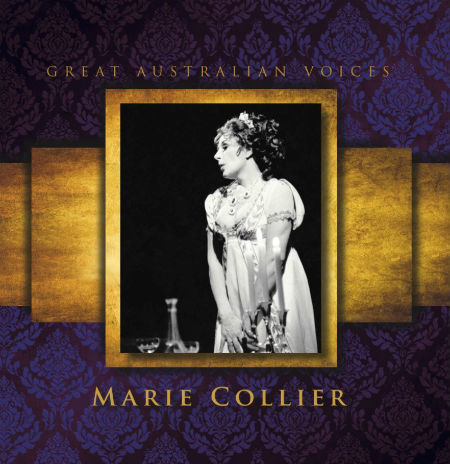
 

 New York heard her in the world premiere of Martin David Levy’s Mourning Becomes Electra (1967) during the opening season of the Met’s Lincoln Center opera house. For many, she dominated the stellar cast headed by Evelyn Lear, Sherrill Milnes, and John Reardon. Although Collier’s riveting presence and distinctively intense sound thrived in her many modernist roles, her strong affect, musicality, and spot-on intonation invest Aïda’s daunting Act III aria, “O patria mia” with special pathos. The clip is from a 1966 Buenos Aires performance.


Tenor Salvatore Licitra also won fame by substituting for an operatic superstar. When Luciano Pavarotti called in sick for the Met’s gala Tosca on May 11, 2002, Licitra took the stage in his company debut and won an ovation. Facing execution, Mario’s poignant farewell to his beloved Tosca, “E lucevan le stelle (The stars were shining”) documents the enlivening effect of Licitra’s sensitive phrasing on the familiar aria. The clip is from a 2000 La Scala production, conducted by Riccardo Muti. The tenor went on to sing nine roles in seven Met seasons. His last was, again, Mario Cavaradossi, in April 2011. At the age of forty-three, he died as a result of a motocycle crash in August 2011.


Saturday, November 19, 2016

The Return of William Tell


Note to those who receive new posts via e-mail: You must click on the title of the new post, highlighted above in blue, in order to access moving images and sound.

Audiences of our time know Rossini best for his comic operas (opere buffe) composed for Italian theatres on Italian librettos--Il Barbiere di Siviglia, La Cenerentola, L’Italiana in Algeri. We are generally less familiar with Rossini’s opere serie (serious operas) of which Guillaume Tell (1829) is certainly the grandest. It also marked his farewell to the lyric stage.

By the 1820s, Paris was the center of the opera world and Rossini’s base of operations. Guillaume Tell was commissioned directly for the Paris Opéra and set to a French text. Two of his earlier opere serie had been premiered in Italy in Italian and then adapted into French for the Parisian stage (Maometto II [1820] became Le Siège de Corinthe [1827], Mosè in Egitto [1818] turned into Moïse et Pharaon [1828]). But it was Guillaume Tell that had a profound influence on what was to become known as le grand opera français. The genre demanded four or five acts, a historical subject, usually a revolt against political oppression (as in the legend of the Swiss hero William Tell who led the fight against the Austrian occupiers) or religious persecution (as in Halévy’s La Juive [1835] and Meyerbeer’s Les Huguenots [1836]). Also expected were spectacular scenic effects, a significant role for the orchestra and chorus, and an extended ballet sequence during Act III, all to the measure of the rich resources of the French national theatre.

The Metropolitan first staged Guillaume Tell in its second season, 1884-1885, in German, at the start of the seven-year span when the entire repertoire was sung in that language. In 1894-1895 it was revived in Italian, and then again in Italian in 1923 in a shortened version, as had long been the custom. It was performed from time to time on Broadway and 39th Street until 1932, and then, not again, until this fall when it was finally presented by the Metropolitan in a nearly five-hour version, and in the original French. Of late, the opera has enjoyed a rebirth not only in New York but in major European houses—London, Paris, Munich, Turin, Bologna, Warsaw. One explanation for its absence is no doubt the difficulty of putting on so large scale and lengthy a piece, and the challenge of casting the leading tenor role. The memory of the work has been kept alive during the Met’s eighty-four-year hiatus by the final section of its often performed overture. Here the La Scala orchestra is conducted by Riccardo Muti.


The libretto of Guillaume Tell inserts romance into the early 14th-century narrative of popular uprising. In Act II, Mathilde, a Hapsburg princess, finds refuge in the “Sombre forêt (dark forest)” where she confesses her love for the Swiss Arnold. The aria is an example of the style Rossini continued to refine for his French audience. The soprano’s line calls for both legato and flexibility although less rigorous than the virtuosic florid singing dominant in the composer’s Italian works. In this clip from a complete recording of the opera, Montserrat Caballé negotiates the sinuous phrases with the luminous tone and soft attacks that are her trademark.


The composer cast Tell’s most extensive stretch of solo singing not as an “aria,” a set piece, but as an enhanced recitative integral to the “scene.” The turbulent episode of Tell’s arrest is followed by the feat that made him the stuff of legend: shooting the arrow through the apple perched on his son’s head, as ordered by the Austrian tyrant. In “Sois immobile,” itself a moment of stasis, of reflection, Tell instructs his son to be still. As you will hear, most of the unembellished music lies in the comfortable middle of the baritone range. The singer is Gabriel Bacquier.


In “Asile héréditaire (refuge of my birthplace)” the bereaved Arnold addresses his devastated home, laments the loss of his murdered father, and commits himself to rebellion against the Austrian oppressor. The aria repeatedly rises to the tenor’s high register; the rousing call to arms of the cabaletta repeatedly ascends to the stratospheric high C. Arnold was written for Adolphe Nourrit, the leading tenor of the Opéra, master of the voix mixte (mixed voice) that allowed for lightly attacked and sustained high notes. In 1836 Gilbert Duprez astounded Paris with stentorian high Cs, the “ut de poitrine,” and changed tenor technique forever. The despondent Nourrit, having failed in his attempt to conquer the new sound, jumped to his death from a Naples hotel window in 1839. The clip we have chosen features Juan Diego Flórez, a singer of exceptional grace, who easily masters the high tessitura of the aria.


The last excerpt is from a Paris performance of 2003. This is the transcendent finale, led by baritone Thomas Hampson: the Austrian despot is no more, the sun shines on the free Swiss people.


The Metropolitan Opera will not be screening its long awaited new production of Guillaume Tell “Live in HD.” Rossini’s opera will, however, be broadcast via radio on March 18, 2017.