Showing posts with label Verdi. Show all posts

Monday, June 1, 2026

Interrupted Melodies: Krause, Pulliam, Collier, Licitra

In 2026 the sudden deaths of Rainelle Krause and Limmie Pulliam shocked and saddened the opera world. Both Krause and Pulliam enjoyed very successful recent engagements in important venues. Their loss brings to mind other artists whose careers were truncated by tragic accidents or fatal natural causes. This post will serve as a memorial to Krause, Pullman, Marie Collier, and Salvatore Licitra.

Rainelle Krause sang the Queen of the Night in Mozart’s Die Zauberflöte nearly one hundred and fifty times in major opera houses, including the Metropolitan. This clip of Krause in a 2023 performance at the Dutch National Opera documents her extraordinary command of the aria’s extreme range, florid complexity, and most unusually, the fury of the Queen’s wrath---and all the while roaming the stage in a wheelchair.


Rainelle Krause died of complications following surgery on March16, at the age of thirty-eight.

Dramatic tenor Limmie Pulliam died in his sleep on May 19-20, just after singing in Mahler’s Eighth Symphony with the Dallas Symphony. Two brief clips fully convey not only the power of his voice but his deep feeling for the text, the homogeneity of his beautiful timbre, and his solid technique. First are the daunting phrases of “Esultate,” Otello’s triumphant entrance in Verdi’s opera.


In the Act III aria, “Ch’ella mi creda (Let her believe,” from La Fanciulla del West,” Dick Johnson, about to be lynched, sings of his love for Minnie. In this clip from a rehearsal (unfortunately, the tenor is barely visible in the left corner of the image), Pulliam movingly proves his affinity for the heartbreaking lyric register of one of Puccini’s most haunting melodies.


Australian soprano Marie Collier died in 1971 at the age of forty-four. It was never ascertained whether her fall from a window was an accident or suicide. Collier’s lively international career began when she stepped in for Maria Callas in a sold-out 1965 London Tosca. 
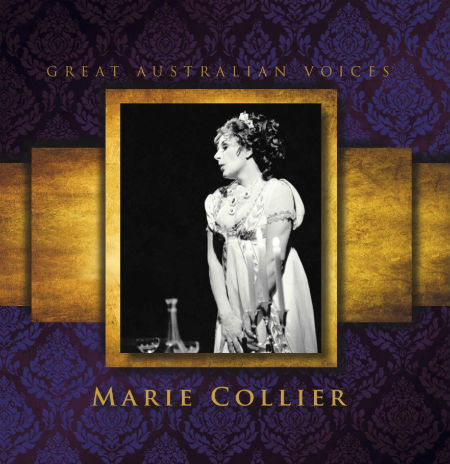
 

 New York heard her in the world premiere of Martin David Levy’s Mourning Becomes Electra (1967) during the opening season of the Met’s Lincoln Center opera house. For many, she dominated the stellar cast headed by Evelyn Lear, Sherrill Milnes, and John Reardon. Although Collier’s riveting presence and distinctively intense sound thrived in her many modernist roles, her strong affect, musicality, and spot-on intonation invest Aïda’s daunting Act III aria, “O patria mia” with special pathos. The clip is from a 1966 Buenos Aires performance.


Tenor Salvatore Licitra also won fame by substituting for an operatic superstar. When Luciano Pavarotti called in sick for the Met’s gala Tosca on May 11, 2002, Licitra took the stage in his company debut and won an ovation. Facing execution, Mario’s poignant farewell to his beloved Tosca, “E lucevan le stelle (The stars were shining”) documents the enlivening effect of Licitra’s sensitive phrasing on the familiar aria. The clip is from a 2000 La Scala production, conducted by Riccardo Muti. The tenor went on to sing nine roles in seven Met seasons. His last was, again, Mario Cavaradossi, in April 2011. At the age of forty-three, he died as a result of a motocycle crash in August 2011.


Wednesday, May 28, 2025

Recovering the Forgotten Singer: Margarete Klose (1899-1968)

From the 1930s through the mid-20th century, Ebe Stignani, the acknowledged queen of dramatic mezzo-sopranos, reigned at La Scala, guested widely in Europe, appeared in North and South America (but never at the Met) and committed authoritative renditions of the classic Verdi roles to disc. (insert) Margarete Klose, would have given Stignani a run for the money if she had sung Amneris, Eboli, and Azucena in Italian rather than German. It was the practice in the major European opera houses to use the vernacular—La Forza del destino was Die Macht des Schicksals in Vienna; Götterdämmerung became Il Crepuscolo degli dei in Milan. Klose appeared in London, Brussels, Buenos Aires, and briefly in San Francisco and Los Angeles, but primarily in the German repertoire. A Bayreuth regular, she was a peerless Ortrud, Brangäne, Fricka; Germany and Austria heard her Verdi and Gluck roles auf Deutsch.

Her voice was exceptionally equalized, at home at the extremes of her range, her timbre rich and instantly recognizable. Klose was notable in the Classical utterances of Orfeo and Alceste and in the Romantic outbursts of Eboli and Azucena. In this clip, from a 1938 recording, the finely sculped phrases of Alceste demonstrate her gorgeous tone and scrupulous musicality. The Queen of Thessaly despairs of her husband’s death and beseeches pity from the nether gods in “Divinités du Styx ("Ihr Götter ew'ger nacht").


Klose was justly famous for her Orfeo, in both Italian and German. Here is the aria, “Che faro senza Euridice," sung in Italian on a post-War complete recording of Orfeo ed Euridice. 


ed 


Klose conquers the extended range, the declamations and lyric phrases, and the dynamic contrast demanded by “O Don fatale (“Verhängnisvoll war das Geschenk)” from Don Carlo. The German-language text in no way inhibits Eboli’s Italianate passion. 


Klose’s seamless legato and luscious timbre combine for an irresistibly seductive Dalila. She sings “Mon Coeur s’ouvre à ta voix (Sieh, mein Herz erschließet sich).” In this mid-1940s clip, the Berlin Philharmonic is conducted by the legendary but allergic-to-recordings Sergiu Celibidache.


P.S. Highly recommended, from YouTube, are the arias from Un Ballo in Maschera and Il Trovatore, in German.


Monday, March 17, 2025

The Beautiful Voice, 1: Margaret, the Other Price

Operaphiles generally agree about singers whose prime attribute is a beautiful voice. Before recognizing musicality, charisma, interpretation, diction, personality, they comment on timbre: the dominant adjectives are “creamy”, “sweet,” “dulcet.” This blog has devoted posts to singers initially beloved for their “beautiful voice, among them Kathleen Ferrier, Renata Tebaldi, Dorothy  Maynor, and Rosa Ponselle. This is the first in a series of posts focused specifically on artists endowed with a “beautiful” voice.

Two sopranos shared a family name, a repertoire, an era, and esteem for the luscious quality of their timbre. Margaret Price (1941-2011
) was more than a decade younger than Leontyne Price (1927- ). Although her career was centered  in Europe, with particular allegiance to the opera companies of Cologne and Munich, Margaret sang frequently in Chicago and San Francisco. She rarely performed with the Met--less than twenty times between 1985 and 1995; Leontyne was a major Met star; her tally was over two hundred performances between 1961 and 1985. They are both remembered for the Donna Annas of Don Giovanni, Fiordiligis of Così fan tutte, and Amelias of Verdi’s Un Ballo in Maschera. They sang Aïda, Margaret much less successfully than Leontyne, for  whom it was a signature role (Leontyne once replaced an indisposed Margeret in a San Francisco Aïda). Margaret excelled as Mozart’s Konstanze (Die Entführung aus dem Serail), a bravura assignment Leontyne never attempted. As far as I know, Margaret never took on La Forza del destino, one of Leontyne’s specialties. Her favorite Verdi assignment was Elisabetta in Don Carlo, never to be Leontyne’s lot.


Margaret Price’s discography is extensive and covers the breadth of her repertoire. The YouTube clips referenced in this post give some idea of the clarity and extraordinary texture of her voice but, alas, cannot reproduce the magic of her sound as it was heard live.


Margaret often said that she became a singer because she loved lieder. The first clip is Mahler’s song “Ich bin der Welt abhanden gekommen (I Am so Lost to the World),” based on a poem by Friedrich Rückert. Here is a translation of the last lines: “I am now dead to the world's commotion/ And, resting in this silent retreat,/ I live alone in my own heaven,/ In my own loving, in my own song.” The soprano captures the touching introspection of the piece and engages in a haunting duet with the often repeated English horn solo.


Mozart was a key figure in Margaret Price’s early success and enduring career. She
made her debut in the mezzo-soprano role of Cherubino before moving upward to the
challenging soprano leads of Don Giovanni and Così fan tutte. Many theatres heard her Contessa in Le Nozze di Figaro. Here is the great Act III aria “Dove sono I bei momenti (Where have all those happy moments gone)” from a 1984 live concert in San Francisco. Price conveys the agitation of the recitative, then the Contessa’s sad reflection on her happy past, when she was certain of the love of her philandering husband and, finally, in the spirited cabaletta, on her hope to regain it. Of note, in addition to the stunning quality of Price’s timbre, is the rhythmic precision of her phrasing and embellishments and the perfection of her attacks, all serving the
vivid expression of mood and character.


Margret Price sang Verdi frequently, unleashing the opulence of her voice in the expansive melodramatics of his scores. Her favorite Verdi role, Elisabetta, calls upon the wealth of the soprano’s resources as she addresses the tomb of Charlemagne (“Tu, che le vanità conoscesti del mondo [You have known the vanities of this world]”), lamenting her lost love, Don Carlo, her loveless marriage to his father, King Philip, and her hope to protect Carlo from Philip’s wrath. Price, the impeccable singer of lieder and the classical Mozart stylist, is also an authentically demonstrative Verdian spinto. The clip is from a 1986 concert conducted by Christoph Eschenbach.


The most surprising excerpt in this post comes from a complete recording of Tristan and Isolde. Isolde is a role that calls for the sturdiest lungs, the greatest volume, the strength of a Kirsten Flagstad, Helen Traubel, Birgit Nilsson, to name only its most illustrious exponents at the Metropolitan Opera. Margaret Price, who never considered herself a Wagnerian or a dramatic soprano, of course never agreed to sing Isolde live, on stage; she did answer the call of conductor Carlos Kleiber to commit the role to a recording. Here, her “beautiful,” young, lyric voice gives subtle and revelatory expression to Wagner’s Irish princess. For many, it is the definitive recorded Isolde. The “Liebestod,” is a fitting climax to Price’s unerring traversal of Isolde’s journey.


PS: Margaret Price even excels in Puccini, as you will hear in this excerpt from a complete recording of Turandot, conducted by Roberto Abbado (nephew of Claudio Abbado). She sings, of course, Liù, not the title role. Here is her touching rendition of the Act III aria, “Tu, che di gel sei cinta, (You, who are girdled in ice).”


Monday, September 4, 2023

In Memoriam: Renata Scotto (1934-2013)

 The vast repertoire of Renata Scotto encompassed 19th century vocal music, from the Classical Cherubini to the Grand Opera of Meyerbeer, through the great bel canto composers, Rossini, Bellini, and Donizetti. Although she often played Verdi’s Violetta, Gilda, Lady Macbeth, Luisa Miller, and Desdemona, Scotto was perhaps most renowned for her Puccini roles. On the concert or the operatic stage, and most often on both, she left her mark on nearly all his works, from Le Villi (Anna) to Turandot (Liù). From the mid-1960s through the early 1980s Scotto was one of most widely recorded operatic sopranos; approximately forty of her complete performances are available on commercial and pirated CDs and DVDs.

Following her 1952 debut in La Traviata, Scotto was engaged by the major Italian opera companies. Her breakthrough to international stardom occurred during the visit of La Scala to the 1957 Edinburgh Festival when she replaced Maria Callas in Bellini’s La Sonnambula. She first appeared in the U.S. as Mimi in Chicago in 1960 and five years later triumphed as Cio-Cio-San at the Met, the role with which more than two decades later she bade farewell to the company.  She had racked up more than 300 Met performances in New York and on tour. Fortunately for us, she can continue to be seen and heard streaming in the 1977 inaugural telecast of PBS Live from the Met, La Bohème, and eight other titles in the series. And after retiring from major lyric theatres in the 1990s, well into her sixties, she took on a new language, German, and new arduous roles, the Marschallin (Der Rosenkavalier), Kundry (Parsifal), and Klytemnestra (Elektra).

Scotto was often the object of harsh criticism. Some found her detailed phrasing overly fussy, her acting mannered, and “over the top.” Many criticized her for attempting parts that normally fell to rich-voiced dramatic sopranos—Bellini’s Norma, Ponchielli’s Gioconda, for instance. There is no denying that she was often unable to produce the requisite volume with beautiful, rounded tone. But for many there were sufficient compensations in her refined bel canto technique and her deep insight into the music and the text.

I have chosen three clips that illustrate Scotto’s command of the light-voiced lyric coloratura manner, the more assertive phrasing demanded by Verdi, and the searing intensity needed for Puccini.

At the close of Donizetti’s L’Elisir d’amore, in the heartfelt “Prendi, per me sei libero (Take this, I have bought back your freedom)” Adina at last confesses her love for Nemorino as she offers him proof that she has saved him from his reckless enlistment in the army. This clip is from a televised 1967 Florence performance conducted by Gianandrea Gavazzeni. Scotto’s mastery of messa di voce, the gradual crescendo and subsequent decrescendo of a single note, shapes the aria with the emotions the character is finally able to express. The Nemorino you see seated next to Adina is Carlo Bergonzi.


Scotto’s Gilda is captured on two commercial recordings. This clip is drawn from the version conducted by Carlo Maria Giulini. Here, in “Tutte le feste al tempio (Each holy day in church),” Gilda confesses to Rigoletto, her distraught father, that she fell in love with a handsome stranger, the Duke of Mantua disguised as a poor student, and was later kidnapped by the Duke’s courtiers.


As Scotto enacts Cio-Cio-San’s resolve to commit suicide and bids an agonized farewell to her little son, she summons the tragic stature of the abandoned wife determined to die with honor. This clip is drawn from a remarkable 1967 recording conducted by Sir John Barbirolli. At the very end you will hear the voice of Pinkerton {Carlo Bergonzi) calling out, all too late, the name of the Japanese wife he has betrayed.


YouTube offers a profusion of Scotto’s performances. Particularly recommended are her Violetta (La Traviata), Elena (I Vespri Siciliani), Cio-Cio-San (Madama Butterfly), and the DVD of her 1977 Mimì from the Live from the Met telecast.


Thursday, April 6, 2023

Recovering the Forgotten Singer, 6: Yevgeny Nesterenko

Russian bass Yevgeny Nesterenko (1938-2021) was one of the phenomenal singers the U.S. discovered in 1975 during the first New York visit of the Bolshoi Opera. His Boris Godunov was a highlight of a several-week visit that introduced a generation of Soviet stars, among them Elena Obraztsova, Yuri Mazurok, and Vladimir Atlantov, many of whom went on to international careers.

Soon after winning a first-place prize in the 1970 Tchaikovsky competition, Nesterenko joined the Bolshoi as its leading bass. The Moscow company remained his home for three decades. At the Vienna State Opera and at La Scala he performed the principal roles of the core repertoire written for his voice type.

Nesterenko’s dark, rich timbre, the ease and strength he commands throughout his range, and the power and subtlety of his acting are fully deployed, as you will see, in the death scene of Modest Mussorgsky’s Boris Godunov. The czar’s tender farewell to his son is the inexorable denouement of this tragic history play. Our clip is drawn from a 1978 Bolshoi performance.


Here is the bass’s lyric interpretation of his Act III aria from Tchaikovsky’s Eugene Onegin. In this commercial recording the mature Prince Gremin voices the depth of his love for his young wife, Tatiana.


Nesterenko was one of the leads in La Scala’s 1978 revival of Verdi’s Don Carlo, conducted by Claudio Abbado. A recording of that production is excerpted here. The singer’s heartrending delivery of “Ella giammai m’amò (She Never Loved Me)” conveys the despair of King Philip as, alone on the stage, he comes to understand that his love for his consort, Elisabeth of Valois, has never been requited.


After his retirement from the opera stage and the concert hall, Nesterenko pursued an active teaching and scholarly schedule until his death from COVID-19.

We encourage readers of this blog who share our enthusiasm for this very great and largely forgotten artist to access YouTube clips of Nesterenko in arias by Mozart, Rossini, Borodin, Puccini, and songs by Mussorgsky, Rachmaninoff, and Shostakovich.


Friday, May 29, 2020

In Memoriam: Jessye Norman, 1945-2019

Note to those who receive new posts via e-mail: You must click on the title of the new post, highlighted above in blue, in order to access moving images and sound. 

Jessye Norman died on September 30, 2019. We should not expect to see her like again. Vocally, dramatically, and physically, she dominated world stages throughout a career that spanned four and a half decades and an astonishing diversity of styles: those of the Baroque, 20th-century modernism, spirituals, jazz, the American songbook. Happily for us, the wide compass of her operatic repertoire of forty roles was captured on CD and DVD.

Norman was, of course, a dramatic soprano. Had she followed convention, she would have found a prominent place in the core offerings of premier opera companies. Her power and sumptuous timbre marked her as a worthy successor to, say, Zinka Milanov in the Italian canon or Kirsten Flagstad in the German. But she deviated from the prescribed path early in her career by eschewing Verdi (except for two rare operas she performed only in the recording studio) and avoiding the Wagnerian diva’s obligatory Isoldes and Brünnhildes. And she never engaged with the most popular opera composer of the 20th century, Puccini. In the peak years of Norman’s international fame she embraced Purcell, Berlioz, Richard Strauss, Janáček, Bartók, Stravinsky, Schoenberg, and Poulenc, and in doing so, was instrumental in reshaping the taste of the public and the standard offerings of the major lyric theatres.

In 1969, at only twenty-four, Norman made her opera debut with the prestigious Deutsche Oper in Berlin as Elisabeth in Wagner’s Tannhäuser. The Thuringian princess became one of her favored roles. In her ecstatic entrance aria, “Dich teure Halle (O cherished hall),” Elisabeth invests the space with memories of her beloved minnesinger Tannhäuser and her joy at his return. In a 1985 London concert the audience gives an extended ovation to the singer’s stunning exhibition.


Another of Norman’s early Berlin roles was the Countess Almaviva in Mozart’s Le Nozze di Figaro. In the exquisite “Porgi, Amor (Love, grant me respite)” she entreats Amor to rekindle the affection of her philandering husband. Norman’s impeccable legato and clarity of attack limn the introspection of the Countess, her heroic voice hushed to the finely spun piano dynamics. We hear the soprano in the 1971 recording of the complete opera, conducted by Colin Davis.

Clip:

Ariadne in Richard Strauss’s Ariadne auf Naxos was, by far, the role Norman sang most frequently in her nearly one hundred appearances in over more than thirteen seasons at the Met. Both the comic Prima Donna of the Prologue and the tragic Ariadne of the opera seria suit the soprano’s temperament and her prodigious vocal resources. Norman negotiates the more than two-octave span of the aria, “Es gibt ein Reich (There is a kingdom),” from G sharp, well below the comfort zone of most sopranos, to high B flat, much of it forte, with remarkable evenness of timbre. Her crystalline diction conveys the despair of the Cretan princess, abandoned by her lover Theseus on the deserted isle of Naxos, as she begs for the deliverance of death. We hear Norman in a 1988 Leipzig recording led by Kurt Masur. A DVD of her Met Ariadne, made the same year, is available on Youtube.

Clip:

Post Script: Jessye Norman was the object of deep affection and high regard in France. She was the recipient of several official honors, including the Légion d’honneur. A measure of the esteem she enjoyed was the choice of Norman, an American artist, to sing “La Marseillaise” in the spectacular celebration of the 200th anniversary of the French Revolution on July 14, 1989. Draped in the Tricolor that recalled “Marianne,” the national personification of the French Republic, she stood at the foot of the obelisk at the center of the Place de la Concorde and unfurled her huge voice in this extravagant rendition of what is arguably the most stirring of national anthems.


Wednesday, October 14, 2015

Otello's Met Fortunes


We are pleased to return to OperaPost with this entry on Giuseppe Verdi’s Otello, the September 21, 2015 opening bill at the Met and, on this coming Saturday, October 17, the second of the “Met Live in HD” telecasts for 2015-16.

A word about the surprising fortunes of Verdi’s penultimate opera at the Metropolitan. (His last, also based on a Shakespeare text, was the comic Falstaff.) Early on, Verdi’s Otello struggled to endear itself to New York audiences. In its first performance, in 1891, the company’s leading tenor, Jean de Reszke, took on the title role.  Although critics hailed de Reszke and the opera, the other principals and the production were considered unworthy of the work and its single performance drew the season’s lowest box office. Revived three years later with Francesco Tamagno and Victor Maurel, the Otello and Iago of the La Scala world premiere in 1887, and the very popular Emma Eames as Desdemona, Otello ticket sales fell well below the season’s average, despite dithyrambic reviews. Here is Tamagno trumpeting Otello’s mighty entrance in a 1903 recording.


In 1895, a leading critic despaired at indifference to “one of the most important works of the last ten years” and went on to complain that since New York was “not really a profoundly musical city,” there was an insufficient audience to support so somber a piece. 
Oddly enough, Otello thrived in the 1901-1902 season, and then, inexplicably, between 1909 and 1914, it drew poorly for most of the 29 times the company’s star conductor, Arturo Toscanini, led the opera. Toscanini was particularly close to Otello; he had played in the cello section at the La Scala premiere supervised by Verdi himself. One act of Otello made it to the Met stage during a 1934 gala. This was Lauritz Melchior’s only chance to sing at the Met a role in which he triumphed in other houses. Here, in the Act II “Ora e per sempre addio,” is a taste of what New Yorkers were denied.
 

Otello would wait nearly a quarter of a century before Giovanni Martinelli, in his 25th Met season (out of a total of 32), was finally cast in the role that is recognized as the most demanding tenor part in the Italian repertoire. In this five-season run, despite excellent notices and a stellar cast, Otello failed once again to attain the seasonal box office average. The public continued to find the exacting score a hurdle it was unwilling to overcome. Lawrence Tibbett, who played “honest Iago” opposite Martinelli’s “Moor of Venice,” sings the opera’s famous “Credo” in this recording.


In 1948, Otello enjoyed the distinction of being the first opera to be telecast from the Met stage. But even this signal event fell short in increasing the work’s popularity. It was only with its revival in 1955 that the opera could be counted on to sell out the house, as it has so frequently ever since. The stentorian Mario del Monaco and the phenomenally gifted Leonard Warren were already familiar as Otello and Iago. It was the Desdemona, Renata Tebaldi in her Met debut, who made the difference. The audience immediately took Tebaldi to its heart, where she remained for nearly twenty seasons. We have chosen the Act IV “Ave Maria” from a 1954 La Scala performance to demonstrate the unique warmth of her timbre, her phenomenal breath control, her haunting pianissimo. Among the many transcriptions of live Otellos and several commercial recordings, this one captures one of Tebaldi’s most moving renditions of Desdemona’s tragic foreboding. 


A striking feature of this year’s new production is the absence of blackface for the depiction of Otello, played by Latvian tenor Aleksandrs Antonenko. We join other critics in applauding this decision and cite here director Barlett Sher’s pertinent comment: "It really did seem very obvious given our cultural history and political history in the United States, that for me and my production team the idea of putting [Othello] in blackface was completely unthinkable. We can't give in to that cultural trope."


Sunday, April 5, 2015

Remembering Carlo Bergonzi

Note to those who receive new posts via e-mail: You must click on the title of the nclipew post, highlighted above in blue, in order to access images and sound.


In our last post, we remembered Licia Albanese, Met soprano for twenty-six years, from 1940 to 1966, a Puccini specialist. Albanese died in the summer of 2014. With this post we remember Carlo Bergonzi, Met tenor for almost as long, 1956 to 1988, and Verdi specialist. He too, died last summer.

Bergonzi was born in 1924 in the town of Vidalenzo. In nearby Parma he began vocal study with a teacher who counted among his remarkable students the soprano Renata Tebaldi. During WWII, Bergonzi was interned in a German camp for three years. At war’s end, he resumed his education in music and eventually made his debut as a baritone in 1948, as Figaro in Rossini’s Il Barbiere di Siviglia. For several years, Bergonzi appeared in a variety of baritone parts in Italy’s provincial opera houses. But he would soon realize that he was in fact a tenor. He made his tenor debut as Andrea Chénier in Umberto Giordano’s opera in 1951. Two years later, Bergonzi made his La Scala debut, and in 1955, his US debut at the Lyric Opera of Chicago. His first Met performance took place on November 13, 1956, the seventh season of general manager Rudolf Bing’s tenure in New York.

As we wrote in our recent history of the Metropolitan, Grand Opera: The Story of the Met (University of California Press, 2014), Bing had ushered in what would be an extraordinary Verdi era with Don Carlo on the opening night of his inaugural season, 1950-51. Verdi ruled again on opening nights 1951 and 1952 with Aïda and then La Forza del destino. All this was to be expected. Asked to name his favorite operas, the general manager-designate had ticked off three Verdi titles, and then just one work by each of seven other composers. Between 1950 and 1966, Verdi accounted for 25% of Metropolitan performances, significantly more than the 14% and the 19% of his two immediate predecessors. Under Bing, Verdi pulled far ahead of Wagner, the previous front-runner. Verdi also led the pack in the percentage of new productions, fourteen of fifty-nine. Bing’s predilection would have mattered little had the company not boasted, year after year, a cohort of outstanding singers capable of honoring the master’s melos. Casts that included Zinka Milanov, Leontyne Price, Mario Del Monaco, Richard Tucker, Franco Corelli, Leonard Warren, Robert Merrill, Cesare Siepi, and, of course, Carlo Bergonzi, were arguably the best in the world.

Bergonzi’s first Met engagement was limited to two well-received performances opposite Antonietta Stella, another newcomer, in Aïda and, three days later, in Il Trovatore. He returned the following November to a season-long commitment, a full complement of eight roles that he shared with the company’s array of leading tenors, including well-established stars Tucker and Del Monaco, the recently arrived Daniele Barioni and Giuseppe Campora, and Flaviano Labò and Eugenio Fernandi, making their debuts. He immediately proved himself a model of musical refinement in the repertoire of the Italian dramatic tenor, the tenore di forza. His sweet timbre and shapely phrasing were balm in roles often consigned to singers whose triumphs were measured predominantly in brilliant tone, in the ringing squillo of stentorian high notes.

Although he also excelled in the works of Puccini and others, as amply documented in his extensive discography, Bergonzi defined himself as a Verdi tenor. Late in his career, he committed arias from all of Verdi’s operas to a single album. At the Met, he sang Riccardo in Un Ballo in maschera more often than anyone in the company’s history. In two complete recordings, with Birgit Nilsson, then Leontyne Price, Bergonzi’s mercurial King of Sweden juggles playfulness, passion, and benevolent authority with characteristic finesse. Here, in a 1967 performance from Japan, Riccardo, masquerading as a sailor, asks the fortune-teller to read his future. Master of the aria’s tricky rhythms, Bergonzi shows off both the legato and the brio that made him the tenor of choice in this wonderfully varied role.


Second only to journeyman Kurt Baum, Bergonzi sang the role of Radamès more often than any other Met tenor since the 1940s. In this 1959 recording, cushioned by Herbert Von Karajan’s languorous tempo and the silken texture of the Vienna Philharmonic, he finds a welcome and rarely heard dreamy tone for the warrior’s evocation of his “celeste Aïda.”


The wide-ranging line of “O tu che in seno agli angeli,” from La Forza del destino, is a test of legato and dynamic control. With appropriately dolorous tone, Bergonzi conveys Alvaro’s despair, first in the recitative that recalls the sorrows of his past and the presumed demise of his beloved Leonora, then in the aria, where he wishes for his own death. This clip is from a live performance, thunderously received by the 1965 opening night La Scala audience. Below is a third example of the “covered voice” we heard Bergonzi press insistently, even obsessively, on the young Verdians he coached a decade or so ago in Barcelona during the Concurso Internacional de Canto Francisco Viñas.