Tuesday, August 11, 2026

Vanessa Waits No Longer

Met operagoers happily greeted Vanessa at its 1958 world premiere. Here, at last, was an opera with stirring melodies, a rich orchestral palette, a stellar cast, and a gorgeous production. A predominantly conservative committee awarded Barber’s opera the Pulitzer Prize for music; the music critics of a more contemporary bent were charry with praise. For many, the opera was neither “American” enough nor did it belong to the avant-garde. Barber’s neo-Romantic manner and Gian-Carlo Menotti’s melodramatic libretto were harshly received at its first European hearing at the 1958 Salzburg festival. The popularity of two of the composer’s haunting melodies and its ethereal finale failed to secure a place for the full opera on the world’s lyric stages.

Vanessa, the eponymous heroine, waited two decades for love to reenter her life; her opera required another ten years before restagings captured new audiences. Barber was no longer “old hat.” Two studio recordings and the DVD of a 2018 Glyndebourne production helped secure a place for Vanessa in the canon of late 20th century opera. The Met’s exceptional world premiere cast—Eleanor Steber, Rosalind Elias, Regina Resnik, Nicolai Gedda, Giorgio Tozzi, conducted by Dimitri Mitropoulos—can be heard in excepts and in the complete opera on YouTube. This post features more recent performances of the renascent score.

Vanessa’s niece, Erika, the lynchpin of the narrative, sings the memorable first aria, “Must the Winter Come so Soon.” In auditions and concerts its haunting, melancholic melody favors the timbre and legato phrasing of lyric mezzo-sopranos; it helped make a star of its original exponent, Rosalind Elias. Our clip reminds us of the exquisite art of Katherine Ciesniski, Erika in 1978 at the Charleston Spoleto festival.


Vanessa, believing that her long-absent lover has finally returned, refuses to look at Anatol until he again declares his love. Her aria, “Do not Utter a Word,” has been recorded and sung in concert by many spinto sopranos able to negotiate its contrasting dynamic levels and emotions. Emma Bell is a compelling Vanessa in the 2018 Glyndebourne production.


The Anatol who arrives at Vanessa’s mansion is not the man she expected but his worldly, ne’er-do-well son, who promptly seduces Erika. In the next scene, “Outside this House.” is a lighthearted proposal of marriage to the reluctant Erika who realizes that his promise of superficial happiness does not correspond to the deep love for which she yearns. In this clip from the excellent 2004 recording of the complete opera conducted by Leonard Slatkin, William Burden’s sweet tenor voices Anatol’s personality so deftly conveyed by the facile charm Barber embeds in the music.


It is Vanessa who finally leaves with Anatol; Erika takes her place, waiting for love. Barber caps the opera with a quintet, acknowledged as the masterstroke of the work and one of grand opera’s greatest ensembles. “To Leave, to Break” is excerpted from a complete 2025 concert performance led by Gianandrea Noseda, conducting the National Symphony Orchestra and a superb cast at the Kennedy Center in Washington, D.C.: Nicole Heaston (Vanessa), J’nai Bridges (Erika), Matthw Polenzani (Anatol), Susan Graham (The Old Baroness), Thomas Hampson (The Old Doctor).


P.S. The complete peformances of Vanessa found on YouTube are highly recommended. Stunning excerpts, among others, are sung by Frederica Von Stade (“Must the Winter Come so Soon”) and Leontyne Price “Do not Utter a Word”).
Monday, June 1, 2026

Interrupted Melodies: Krause, Pulliam, Collier, Licitra

In 2026 the sudden deaths of Rainelle Krause and Limmie Pulliam shocked and saddened the opera world. Both Krause and Pulliam enjoyed very successful recent engagements in important venues. Their loss brings to mind other artists whose careers were truncated by tragic accidents or fatal natural causes. This post will serve as a memorial to Krause, Pullman, Marie Collier, and Salvatore Licitra.

Rainelle Krause sang the Queen of the Night in Mozart’s Die Zauberflöte nearly one hundred and fifty times in major opera houses, including the Metropolitan. This clip of Krause in a 2023 performance at the Dutch National Opera documents her extraordinary command of the aria’s extreme range, florid complexity, and most unusually, the fury of the Queen’s wrath---and all the while roaming the stage in a wheelchair.


Rainelle Krause died of complications following surgery on March16, at the age of thirty-eight.

Dramatic tenor Limmie Pulliam died in his sleep on May 19-20, just after singing in Mahler’s Eighth Symphony with the Dallas Symphony. Two brief clips fully convey not only the power of his voice but his deep feeling for the text, the homogeneity of his beautiful timbre, and his solid technique. First are the daunting phrases of “Esultate,” Otello’s triumphant entrance in Verdi’s opera.


In the Act III aria, “Ch’ella mi creda (Let her believe,” from La Fanciulla del West,” Dick Johnson, about to be lynched, sings of his love for Minnie. In this clip from a rehearsal (unfortunately, the tenor is barely visible in the left corner of the image), Pulliam movingly proves his affinity for the heartbreaking lyric register of one of Puccini’s most haunting melodies.


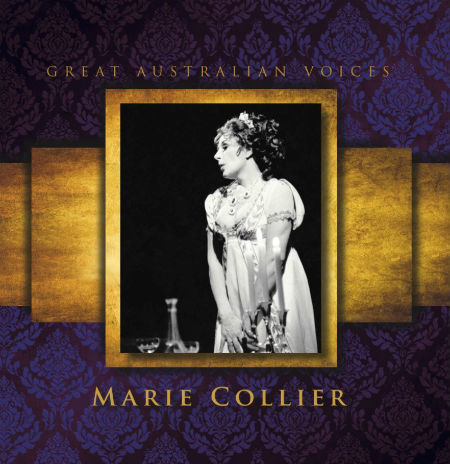
Australian soprano Marie Collier died in 1971 at the age of forty-four. It was never ascertained whether her fall from a window was an accident or suicide. Collier’s lively international career began when she stepped in for Maria Callas in a sold-out 1965 London Tosca. 


 New York heard her in the world premiere of Martin David Levy’s Mourning Becomes Electra (1967) during the opening season of the Met’s Lincoln Center opera house. For many, she dominated the stellar cast headed by Evelyn Lear, Sherrill Milnes, and John Reardon. Although Collier’s riveting presence and distinctively intense sound thrived in her many modernist roles, her strong affect, musicality, and spot-on intonation invest Aïda’s daunting Act III aria, “O patria mia” with special pathos. The clip is from a 1966 Buenos Aires performance.


Tenor Salvatore Licitra also won fame by substituting for an operatic superstar. When Luciano Pavarotti called in sick for the Met’s gala Tosca on May 11, 2002, Licitra took the stage in his company debut and won an ovation. Facing execution, Mario’s poignant farewell to his beloved Tosca, “E lucevan le stelle (The stars were shining”) documents the enlivening effect of Licitra’s sensitive phrasing on the familiar aria. The clip is from a 2000 La Scala production, conducted by Riccardo Muti. The tenor went on to sing nine roles in seven Met seasons. His last was, again, Mario Cavaradossi, in April 2011. At the age of forty-three, he died as a result of a motocycle crash in August 2011.


Sunday, May 10, 2026

Eugene Onegin: A Late Bloomer

 The Met’s successful 2026 revival of Eugene Onegin prompts recall of the opera’s New York history. While Tchaikovsky’s “lyrical scenes” (the composer-named genre) entered the repertoire of some of Europe’s leading theatres soon after its 1881 Bolshoi premiere, they made little impact across the Atlantic until the English-language revival in 1957. Heard only 8 times at the Met, in Italian, between 1919 and 1921, Eugene Onegin has surpassed 150 repetitions since then, a growing total higher than company stalwarts such as Elektra or Pelléas et Mélisande. In 1978 the score finally gained its original Russian text.

The Met’s most recent Tatiana is Asmik Grigorian. Equal to the heroic demands of Elektra and Turandot, she scales her sumptuous voice to the intimate scale of the composer’s lovelorn heroine. In this clip from a 2020 Berlin performance, the “Letter Scene” captures Grigorian in a searing exposure of the vulnerability, the confusion, and the uncontainable passion of a young woman’s first love.


 Tatiana’s letter elicits a cruel response. A smug bachelor, the bored Onegin humiliates the naive girl for her candor and declares he could only love her as a brother. Here is the peerless Pavel Lisitsian in the baritone’s Act I scold.

The most famous excerpt from Eugene Onegin is the tenor’s “Kuda, kuda.” Lenski, offended by his best friend’s flirtation with the poet’s beloved Olga, has challenged Onegin to a duel. Facing death, Lenski bewails the passage of his golden years. In this 1937 clip, Ivan Kozlovsky, the leading tenor at the Bolshoi from the late 1920s to the mid-1950s (his only rival, for the same roles, was Sergei Lemeshev) lends his plangent, effortlessly high-pitched voice and his deeply felt emotion to this heartrending expression of regret and despair.


Act III transpires several years later. Onegin, recently returned to St. Petersburg, attends a ball where he meets Prince Gremin, now Tatiana’s husband. The composer rewards the singer with a rare gift--a love song for the opera bass. With upmost sincerity, Gremin praises his wife and declares that she has immeasurably enriched his life. László Polgár, whose rich European career was, alas, rarely punctuated by engagements in North American, rolls out his rich voice with uncommon subtlety in a 1995 Budapest concert.


YouTube abounds with terrific excerpts and full performances of Eugene Onegin. Search, among many others, the Tatiana of Renée Fleming, Makvala Kasrashvili, and Ljuba Welitsch, the Onegin of Dmitri Hvorostovsky and Yuri Mazurok, the Lensky of Nicolai Gedda and Sergei Lemeshev.

P.S. Here is the unbelievable, and unbelievably moving bass Mark Reizen as Gremin, returning for a Bolshoi birthday tribute at the age of 90—yes ninety!!!


Sunday, January 4, 2026

The Strauss/Mozart/Rossini Mezzo: Samantha Hankey and Tara Erraught

Strauss/Mozart/Rossini mezzo-sopranos—Risë Stevens, Tatiana Troyanos, Frederica von Stade, Joyce DiDonato, to name only a few— often sang the “pants roles” of Octavian and Cherubino; von Stade, DiDonato, Marilyn Horne, and Cecilia Bartoli lent their coloratura agility to Rossini’s Rosina and Cenerentola. Their number has been joined by the American Samantha Hankey and the Irish Tara Erraught.  

Hankey, made her 2018 Met debut in a small part in Mefistofele, followed by supporting roles in Adriana Lecouvreur, Rigoletto, and “The Ring.” Her first lead was as Prince Charming in the 2021 English-language edition of Massenet’s Cendrillon. New York audiences were at last able to applaud her Octavian in the high profile 2023 Der Rosenkavalier co-starring with Lise Davidsen and Erin Morley. Tokyo has heard her Carmen.

Hankey’s first public appearance on the Lincoln Center stage was in the 2017 National Council Grand Finals Concert where she sang arias from Tchaikovsky’s Maid of Orleans (in Russian) and Mozart’s La Clemenza di Tito. Her strikingly dramatic presence, sumptuous yet supple voice, and fine technique are evident in these clips from her prize-winning performances at the 1918 Operalia (Tchaikovsky) and the 1918 Glyndebourne Opera Cup (Mozart)


Tara Erraught’s New York gigs have been much less frequent than Hankey’s. Hänsel and Nicklausse (Les Contes d’Hoffmann) in the 2017-18 season have been her lot to date. Her traversal of Angelina’s final aria in Cenerentola (Irish National Opera, 2020) is an astonishing record of Erraught’s formidable technique, range, creamy timbre, and charisma. She conveys “Cinderella’s” pardon of her nasty sisters and father and her joy at her coming marriage to her prince charming with an irresistible flow of ebullience and joy.


 It is not clear if Hankey and Erraught will continue to be the gold-standard in the Strauss/Mozart pants-roles and the embellishments of Rossini’s feisty leading ladies. Both mezzos have powerful top ranges and have been cast in roles usually taken by sopranos. Hankey has ventured Mélisande and Donna Elvira (Don Giovanni). At her home company, Munich’s Bayerische Staatsoper, Erraught has also sung Donna Elvira. In this clip Erraught glories in the acrobatic fioriture and mock opera-seria pronouncements of Fiordiligi’s “Come scoglio” (Così fan tutte).                                            


Hankey and Erraught are amply represented on Youtube.


Friday, November 28, 2025

Sleepwalking Again: La Sonnambula

The Metropolitan’s new La Sonnambula happily erases the opera’s previous production that twisted the libretto with smirking irony, thus sabotaging Bellini’s sublime score and the excellent singing of the principals, Natalie Dessay, then Diana Damrau as Amina, Juan Diego Florez, then Javier Camarena as Elvino. The present director, Rolando Villazon, rereads the work without betraying its essence. Amina, heretofore portrayed as a passive victim of her fiancé and her rustic village, is here liberated from the restrictions of her hidebound mountain community. Through Villazon’s perspective, the libretto, often characterized as weak, becomes a compelling narrative.

La Sonnambula was one of the first operas treated in this blog: https://www.blogger.com/u/3/blog/post/edit/7211323416075256950/6485706952834799789

I return to it now with a new set of excerpts.

Nadine Sierra adds Adina to her superb Met Gilda, Juliette, and Lucia; she is clearly at the top of her game and among the excellent contemporary exponents of these key roles. In a clip from a 2022 Madrid performance, she deploys exemplary musicianship, a luminous, rich voice, and breathtaking agility in Adina’s joyous entrance aria. Adina thanks the villagers for their good wishes on her forthcoming marriage to Elvino: “Come per me sereno (How peaceful for dawns the new day).”


Bellini composed one of his most plangent melodies for the bass role. Count Rodolfo sings of his happiness at revisiting the site of his youth: “Vi ravviso o luoghi ameni (I again see these lovely places.)” The Italian bass-baritone, Sesto Bruscantini, conveys the wonder of return to a beloved landscape with particular sensitivity.


The finale of Act I is a remarkable ensemble of soloists and chorus: “D’un pensiero e d’un accento rea son son [(I have never sinned in thought or word).” Compromised when found in the Count’s bedroom, sleepwalking Amina is unable to persuade the scandalized and accusatory Elvino and the villagers that she has no idea how she got there. The clip is from a 1957 commercial recording that captures Maria Callas in one of her greatest La Scala successes. Nicola Monti is Elvino; future star Fiorenza Cossotto, still cast in secondary roles, is Teresa. Antonino Votto conducts the La Scala orchestra and chorus.


The opera concludes with a double aria for Amina. In the first, the lyric “Ah! non credea mirarti, (I never believed I would see you.") Amina, in her sleepwalker’s trance, believes that she is reunited with Elvino. Montserrat Caballé, who never performed the role of Amina in the theatre, gives the full measure of the character’s sadness as she shapes Bellini’s characteristically long phrases.


 When Elvino again gives her the ring with which he declared his love in Act I, Amina expresses her joy in the extremely altitudinous range and the virtuosic embellishments: “Ah! non giunge uman pensiero, al contento ond'io son piena (Human thought cannot conceive of the happiness that fills me.”)  In this clip from a 2024 Venice performance, Jessica Pratt astonishes with her technical facility and her ease on high. One of the leading coloratura sopranos on Europe’s opera stages, British born and raised in Australia, she has sung only rarely in the United States.


P.S.  My first post on La Sonnambula, published in 2014, featured the young Cesare Siepi’s recording of “Vi ravviso.” Its beauty is still unequalled. I repeat it here.


Wednesday, September 10, 2025

Verdi's Luisa Miller: Masterwork on the Cusp


William Shakespeare and Friedrich von Schiller were among Verdi’s favorite authors. The Bard of Avon inspired three of the composer’s librettos (Macbeth, Otello, Falstaff); the giant of German Classicism and Romanticism provided subjects for no less than four of his operas: Giovanna d’Arco (Die Jungfrau von Orleans), I Masnadieri (Die Räuber [The Robbers]), Don Carlos, and Luisa Miller (Kabale und Liebe [Intrigue and Love]). Only Don Carlos (known familiarly with its Italian title Don Carlo) has secured a place in the core repertoire of the world’s major lyric theatres.

Luisa Miller premiered just two years before the beloved Rigoletto, Il Trovatore, and La Traviata, vintage 1851-53. Yet with its strong narrative and rewarding roles for five soloists, the opera deserves greater popularity. Its thrilling score culminates in a final act among Verdi's greatest creations.

The Metroplitan Opera did not stage Luisa Miller until 1929; its stellar cast—Rosa Ponselle, Giovanni Lauri-Volpi, Giuseppe De Luca—was able to earn but a paltry six performances in two seasons. The opera waited until 1968 to enter the company’s repertoire with some regularity.

In Act II, in order to save her father, Luisa, a commoner, is forced to write a letter renouncing her love for Rodolfo, the son of the ruling nobleman. She prays that God not abandon her. Adriana Maliponte conveys the pathos with fervor, musical precision, and rich tone, capping the aria with a breathtaking cadenza.


Carlo Bergnzi sings the opera’s most famous aria, “Quando le sere al placido (When in the evening, beneath a starry sky),” recalling the happiness of Rodolfo's love for Luisa. The tenor’s affinity for Verdi and command of the requisite style are fully evident in this commercial recording.


Act III contains one of Verdi’s most touching soprano-baritone duets. Severely put upon by the local aristocracy, Luisa and Miller, her father, contemplate a life exiled from their homeland (“Andrem raminghi e poveri, ove il destin ci porta [We’ll wander, poor, wherever destiny leads us].” Here, from a recording of the complete opera, are Anna Moffo as Luisa and Cornell MacNeil as Miller, both in peak form and sensitive to the pathos of the scene.


Rodolfo, mistakenly believing that Luisa has betrayed him, poisons himself and his beloved. In this extract from a complete recording, Luciano Pavarotti and Sherrill Milnes voice the anguish of Rodolfo and Miller, Montserrat Caballé invests the dying Luisa with ethereal pianissimi. Luisa’s phrases, lofted heavenward, prefigure the demises of Verdi’s Leonoras in Il Trovatore and La Forza del destino.


A number of commercial recordings and excellent live performances are available on YouTube.